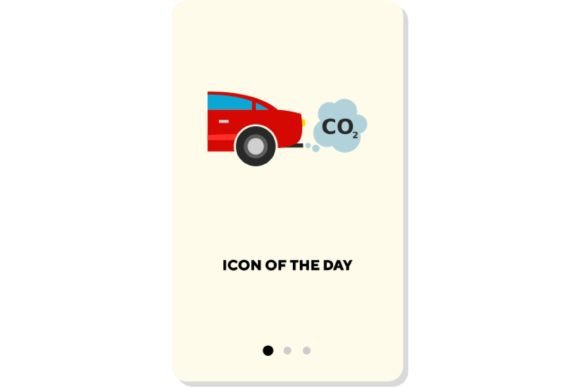
Decoding the Car Engine Flat Vector Icon and Carbon Dioxide Emissions Symbol
In the rapidly evolving landscape of digital design, visual communication has transcended mere aesthetics to become a critical component of user experience and information dissemination. Among the myriad of graphical elements utilized by designers, developers, and marketers, specific icons carry disproportionate weight due to their ability to convey complex technical and environmental concepts instantly. One such element is the Car Engine Flat Vector Icon, particularly when paired with representations of carbon dioxide emissions. This combination is not just a decorative asset; it is a functional tool that bridges the gap between automotive engineering, environmental awareness, and digital interface design.
The relevance of this specific iconography has surged in recent years. As global conversations shift toward sustainability, electric vehicles, and carbon footprints, the need for clear, universally understood symbols has never been greater. The Car engine flat vector icon. Carbon dioxide emissions from a car isolated outline sign serves as a visual shorthand for these critical topics. Whether used in educational materials, automotive dashboards, eco-friendly apps, or corporate sustainability reports, these vector illustration symbol elements for web design play a pivotal role in shaping how audiences perceive and interact with information about transportation and its environmental impact.
The Evolution of Automotive Iconography in Digital Spaces
To understand the significance of the modern flat vector icon, one must look at the trajectory of digital design. In the early days of the web, icons were often pixelated, detailed, and heavily skeuomorphic, mimicking real-world objects with shadows and textures. However, as screen resolutions improved and mobile devices became the primary mode of internet access, design trends shifted toward minimalism. The "flat design" movement emerged, prioritizing clarity, scalability, and speed.
This shift is particularly evident in automotive imagery. The traditional depiction of a car engine was often cluttered and technically dense, suitable only for mechanical manuals. Today’s Car Engine Flat Vector Icon strips away unnecessary detail, focusing on recognizable shapes and clean lines. When combined with the concept of carbon dioxide—often represented by cloud-like shapes or chemical formulas like CO2—the icon becomes a powerful narrative device. It allows designers to communicate the relationship between mechanical power and environmental output without relying on lengthy text explanations.
The evolution of these icons also reflects changing user expectations. Modern users scan content rather than reading it word-for-word. They expect interfaces to be intuitive and information to be digestible at a glance. An isolated outline sign of a car emitting carbon dioxide fits perfectly into this workflow. It is lightweight, loads quickly, and remains crisp at any size, making it ideal for responsive web design where assets must adapt to various screen dimensions.
Why Vector Illustrations Matter for Web Design and Branding
The choice of format is as crucial as the design itself. Vector illustrations, typically saved in formats like SVG (Scalable Vector Graphics), offer distinct advantages over raster images (such as JPEG or PNG) for web design. For professionals and business owners, understanding these technical benefits is essential for optimizing website performance and maintaining brand consistency.
- Scalability: Vector icons can be resized infinitely without losing quality. This ensures that the Car engine flat vector icon looks sharp on a smartwatch display as well as on a 4K monitor.
- File Size Efficiency: Vector files are generally smaller than high-resolution raster images, contributing to faster page load times—a key factor in SEO and user retention.
- Customizability: Designers can easily change the color, stroke width, and opacity of vector elements via CSS. This allows for dynamic interactions, such as changing the color of the carbon dioxide emission cloud from gray to green to indicate reduced emissions.
- Accessibility: Vector code can include metadata and alt text, improving accessibility for users with screen readers and enhancing search engine indexing.
For marketers and entrepreneurs, these technical attributes translate into tangible business benefits. A website that loads quickly and displays consistent, high-quality graphics across all devices builds trust and professionalism. When discussing sensitive topics like environmental impact, the clarity and precision of a well-designed vector icon can reinforce the credibility of the message being conveyed.
Integrating Environmental Concepts into User Interfaces
The integration of the Car Engine Flat Vector Icon. Carbon Diox theme into user interfaces is more than a design choice; it is a reflection of societal values. As consumers become more environmentally conscious, they seek transparency from businesses. Automotive companies, ride-sharing platforms, and logistics providers are increasingly required to display carbon footprint data to their users.
In this context, the icon acts as a visual anchor for data visualization. Imagine a ride-sharing app that calculates the carbon emissions of a trip. Instead of presenting a dry number, the app uses an animated vector icon of a car with a subtle emission trail. This visual cue makes the abstract concept of carbon dioxide tangible and immediate. It encourages users to make informed choices, such as opting for a hybrid vehicle or combining trips to reduce their overall impact.
Educators and bloggers also benefit from these versatile assets. When writing about the transition to electric vehicles or the mechanics of internal combustion engines, inserting a clear, isolated outline sign of a car engine with CO2 emissions helps break up text and illustrate key points. It transforms complex scientific or engineering concepts into accessible visual stories, catering to a broad audience ranging from curious hobbyists to industry professionals.
Practical Applications for Creators and Businesses
For creators, freelancers, and business owners, leveraging these vector elements requires a strategic approach. It is not enough to simply drop an icon onto a page; it must be contextualized effectively. Here are several practical ways to utilize the Car engine flat vector icon. Carbon dioxide emissions from a car isolated outline sign in various projects:
- Sustainability Reports: Corporate social responsibility (CSR) pages can use these icons to highlight reductions in fleet emissions. The visual contrast between a heavy-emission icon and a low-emission icon can effectively demonstrate progress over time.
- Educational Infographics: Bloggers and educators can create infographics comparing different fuel types. Using consistent vector styles ensures that the comparison feels fair and objective, focusing the viewer’s attention on the data rather than disparate artistic styles.
- Automotive Dashboards and Apps: UI/UX designers working on automotive software can use these symbols to alert drivers to inefficient driving habits that increase emissions. Real-time feedback via intuitive icons can promote eco-driving behaviors.
- E-Commerce Product Pages: Sellers of automotive parts or eco-friendly accessories can use these icons to categorize products. For instance, a filter for "Low Emission Parts" could be accompanied by the relevant vector symbol, enhancing navigation and user experience.
When implementing these icons, consistency is key. Ensure that the stroke weight, color palette, and style of the Car Engine Flat Vector Icon match the rest of your design system. Mismatched icons can create visual discord and undermine the professional appearance of your project. Additionally, consider the cultural context of your audience. While the symbol for carbon dioxide is scientifically universal, the interpretation of car imagery can vary. Always test your designs with representative user groups to ensure clarity and resonance.
Future Trends in Visual Communication and Sustainability
Looking ahead, the demand for precise, meaningful iconography will continue to grow. As regulations around carbon reporting tighten and consumer interest in sustainability deepens, the role of visual symbols in communicating environmental data will expand. We may see more dynamic, interactive vector icons that respond to real-time data feeds, providing users with instant feedback on their environmental impact.
Furthermore, the integration of augmented reality (AR) and virtual reality (VR) into automotive experiences will require new forms of visual communication. Flat vector icons, with their clean lines and simplicity, are well-suited for overlaying information in AR environments. Imagine pointing your phone at a car and seeing a floating vector icon displaying its real-time emissions data. This fusion of physical and digital worlds underscores the enduring value of versatile, scalable graphic assets.
For professionals in design, marketing, and technology, staying attuned to these trends is essential. Investing in high-quality, customizable vector libraries is not just a matter of aesthetic preference; it is a strategic decision that supports clearer communication, better user engagement, and aligned brand values. By understanding the nuances of the Car engine flat vector icon. Carbon dioxide emissions from a car isolated outline sign, creators can craft more effective, impactful, and responsible digital experiences.
In conclusion, the seemingly simple act of selecting a vector icon carries significant weight in today’s digital ecosystem. The Car Engine Flat Vector Icon. Carbon Diox represents a convergence of technology, design, and environmental consciousness. By leveraging these tools thoughtfully, professionals can enhance their communication strategies, meet evolving user expectations, and contribute to a more transparent and sustainable digital landscape. Whether you are designing a website, creating educational content, or developing a new app, remember that every visual element tells a story. Make sure yours is clear, compelling, and credible.